
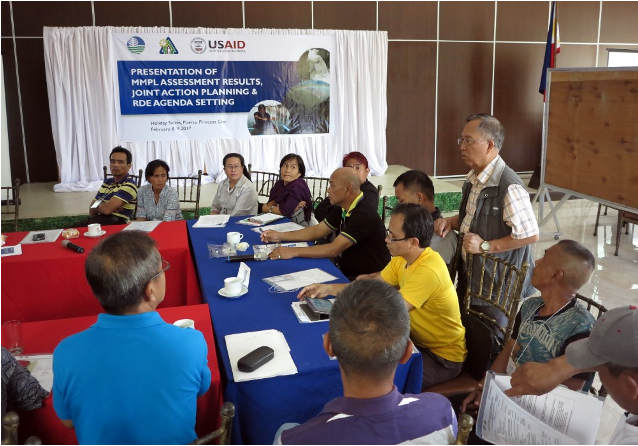
Southern Palawan in the Philippines is home to the Mount Mantalingahan Protected Landscape, the headwater of 33 watersheds and the habitat of newly discovered plants and of wildlife unique to...
There is significant potential to reduce illegal wildlife trade through training and collaborating with airport staff. To take advantage of this potential, the U.S. Agency for International Development (USAID) initiated…
Description: This is an excellent synthesis of lessons learned from a review of past USAID-supported conservation enterprises. The framework for the review was a set of “learning questions” related to the…
This is a very valuable guide to integrating the Open Standards into the fabric of how conservation organizations do business. If we want to improve the effectiveness of our organizations…
 This work is licensed under a Creative Commons Attribution-ShareAlike 4.0 International License. Site design Evermaven