
Phase I of this learning initiative highlighted the need for the conservation community to continue learning about how to incorporate diversity, equity, inclusion and justice (DEIJ) principles into their conservation...
The purpose of the PHE Learning Initiative was to improve CMP's and, more broadly, the conservation sector's understanding of PHE and its value to biodiversity conservation, to identify barriers that...
This report, a product of CMP’s Collaborative Learning Initiative, provides an overview of Global Environment and Development Agendas: Strategies for Conservation. It includes the defining characteristics of this strategy, a…
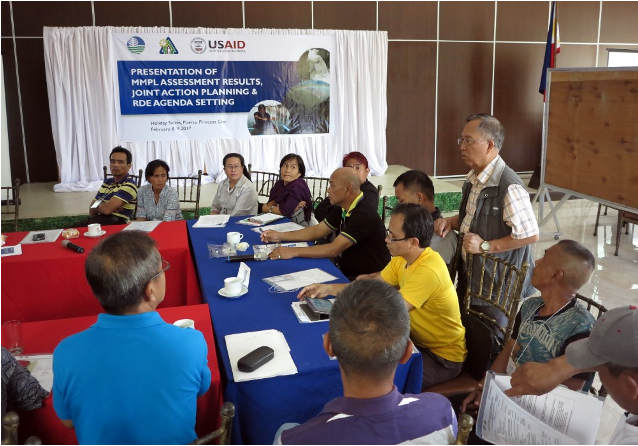
Southern Palawan in the Philippines is home to the Mount Mantalingahan Protected Landscape, the headwater of 33 watersheds and the habitat of newly discovered plants and of wildlife unique to...
In Chile, the Conservation Standards were used to evaluate protected areas (PAs) across an entire country. Chile manages its PAs through its National System of Protected Areas (SNASPE). In 2015,...
Chile is the endemic home to the world’s southernmost palm tree, the Chilean Wine Palm. For centuries, the tree has been heavily exploited, largely for its sap used to make...
There is significant potential to reduce illegal wildlife trade through training and collaborating with airport staff. To take advantage of this potential, the U.S. Agency for International Development (USAID) initiated…
Winners of the 2020 Conservation Standards Case Study Competition, the Endangered Wildlife Trust (EWT) and the International Crane Foundation (ICF) have been working together to conserve crane populations and their...
Political risk and uncertainty are increasing around the world To be effective, conservation organizations need to manage both risks and opportunities due to political uncertainty. Navigating and Adapting to Political...
Following on the success of the first edition of Project Management for Wildlife Conservation, WildTeam has released an updated version 2.0, which is available here. WildTeam - a not for...
Not Display sidebar-1
 This work is licensed under a Creative Commons Attribution-ShareAlike 4.0 International License. Site design Evermaven
Translate »